
Citrus & herbs
Expressive · Bright · Green
A possible direction for a lively contemporary brand.
The lighting, materials and music already tell your brand story. Let scent become another considered detail, planned around how people enter, explore and spend time with your products.
Explore a property concept See how we work with you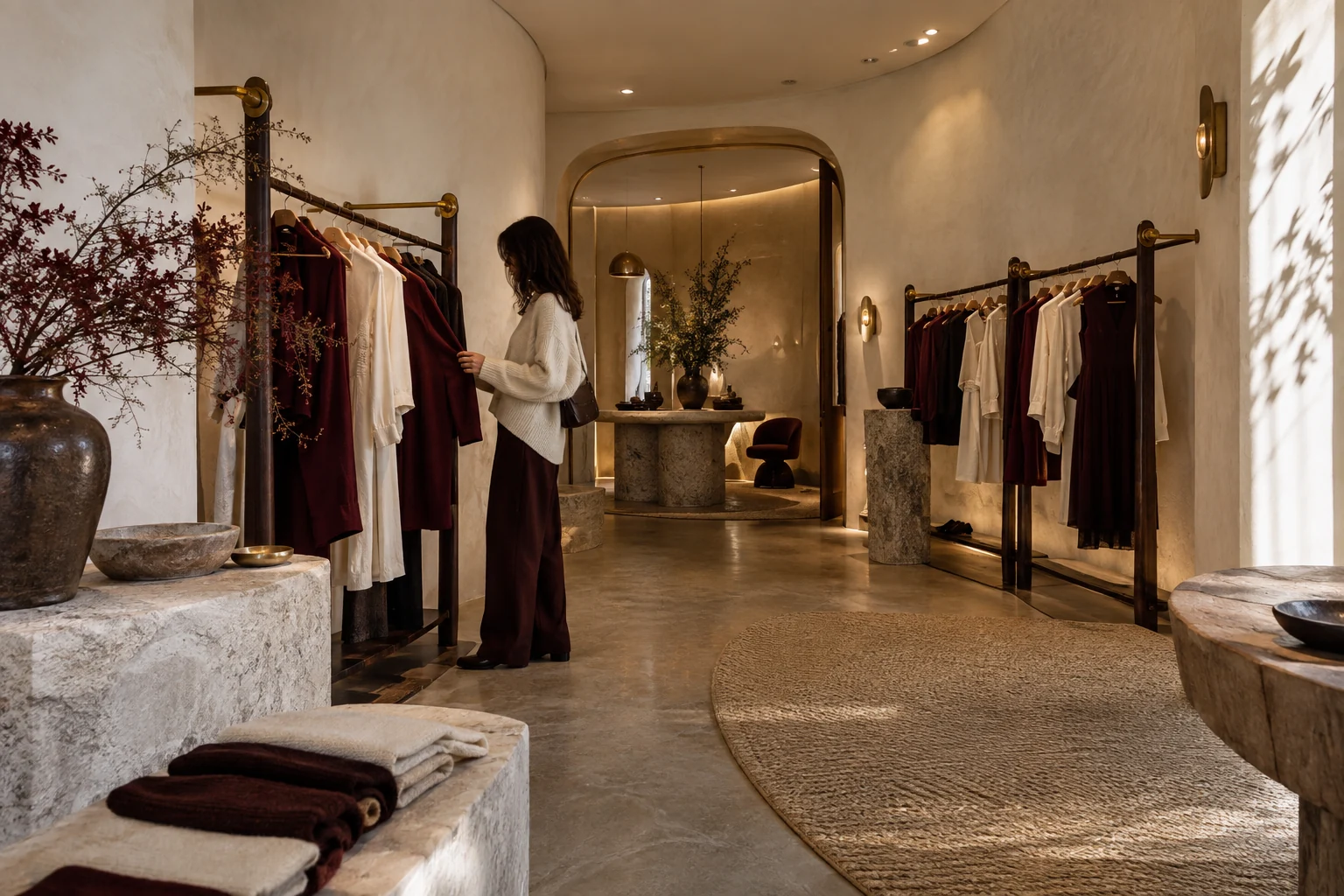
An L-shaped showroom with a window display, product islands, consultation lounge, fitting rooms and stockroom. The atmosphere should support the merchandise and the way people explore it.
Worked design brief · an example property, ready to explore.
Start at the shopfront. Follow the path to a conversation.
A fragrance rationale, reviewable positions and a trial notebook that helps your team decide what belongs in the store.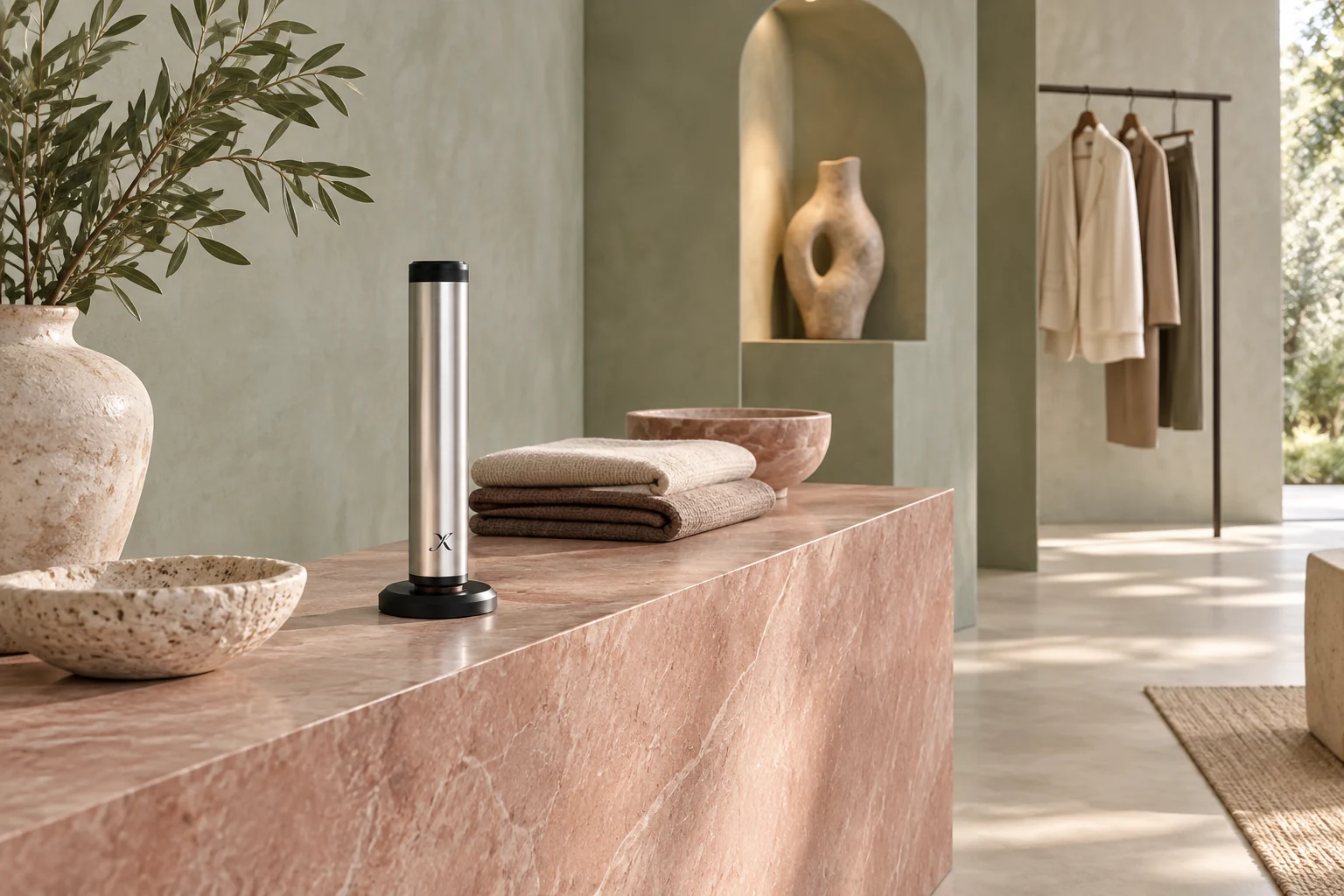
We look for a place where the diffuser complements the display without becoming the display. Access, power, product sensitivity and the path through the store all shape the proposal.
Inside our space assessmentBegin with your materials, merchandise and customer. A fashion boutique, a furniture showroom and a jewellery store should not automatically receive the same fragrance direction.
Expressive · Bright · Green
A possible direction for a lively contemporary brand.
Airy · Delicate · Refined
An option for light materials and personal consultations.
Textural · Rounded · Warm
A direction for rich interiors and intimate showrooms.
Start at the shopfront. Follow the path to a conversation. Select a decision on the drawing to see what we would inspect, what it changes and what still needs checking.
Swipe across the drawing on smaller screens. Enlarge for detail, or select a decision below.
An example architectural layout, not a surveyed property or construction drawing. A–C mark decisions to review, not confirmed machine quantities. The coloured areas describe intent, not simulated airflow or guaranteed coverage.
Your floor plan is the starting point.
The site visit makes the proposal specific.
A fragrance rationale, reviewable positions and a trial notebook that helps your team decide what belongs in the store.
Preview of a proposed project brief. Final deliverables and service arrangements are agreed in your quotation.
A journey from discovery to decision · worked example
| Space | m² | Planning status |
|---|---|---|
| Arrival | 72 | Scenting discussion |
| Cash wrap | 36 | Scenting discussion |
| Discovery floor | 180 | Scenting discussion |
| Consultation | 48 | Scenting discussion |
| Feature window | 48 | Scenting discussion |
| Materials | 24 | Scenting discussion |
| Fitting 1 | 16 | Separate brief |
| Fitting 2 | 16 | Separate brief |
| Fitting hall | 16 | Scenting discussion |
| Stock | 16 | Service / back of house |
The questions that make this property specific.
Confirm door opening patterns, merchandise sensitivity, power and service access before selecting the system.
To be verified on siteWalk the store with the team at opening and busy periods; record feedback and check transfer into fitting rooms.
To be verified on siteAsk staff about comfort and customer preferences; compare like-for-like periods without attributing every sale change to scent.
To be verified on siteBrand fit and too-strong feedback, with comparable visitor and purchasing-visitor counts alongside promotions, opening hours and staffing.
Agree the scope, responsible contact and route for adjustments before handover.
Your property gives us the real dimensions.
Your team gives us the operational detail.
Set the questions before the trial: does the scent belong here, how do shoppers respond, and what else changed in the store? Look at experience and trading figures together.
A meta-analysis found positive effects on satisfaction, purchase intentions and time spent. The pooled expenditure result was not statistically significant.
A correlation is not a percentage sales uplift. Samples span customer settings and outcome groups overlap. Adjusted effects depend on context; these are not results from X clients. Significance is reported for pooled unadjusted effects; plotted values are adjusted.
Roschk & Hosseinpour (2020), Table 3Purchasing visitors ÷ total visitors. Count each visitor once. An observed difference does not show that scent caused the change.
Weekday & hours
Promotions & pricing
Staffing & layout
Shopper & staff feedback
A scent should belong to your brand. A useful trial should tell your store team more than whether the fragrance was noticeable.
Build your store’s scent briefTurn the store identity into a short sensory brief: materials, pace, merchandise and the feeling you want at the threshold. Agree what would feel out of place.
Plan comparable observation periods and record footfall, promotions, staffing and opening hours. Decide the questions before discussing trial results.
Collect shopper and staff feedback alongside counts such as visitors and purchases. Track scent appropriateness and any too-strong feedback separately from commercial metrics.
Review the observations and operating effort together. If proceeding, agree the placement, settings and care arrangements; reassess when the merchandise or store layout changes.
We develop a shortlist around your brand character, interior and intended experience. You can explore existing fragrance directions or discuss a separate bespoke brief.
We do not promise a sales uplift. The proposal focuses on an appropriate atmosphere, customer and staff feedback, and whether the scent direction fits your store.
Tell us how your floor changes. We can consider access and placement flexibility when developing the proposal, then review changes that affect the scenting area.
Bring your floor plan if you have one. Your location, approximate area and the spaces you want to scent are enough to start the conversation.
Scope, equipment and service terms are confirmed in your quotation.
Interiors are visual concepts created for X Essential Oils, not photographs of named client installations.