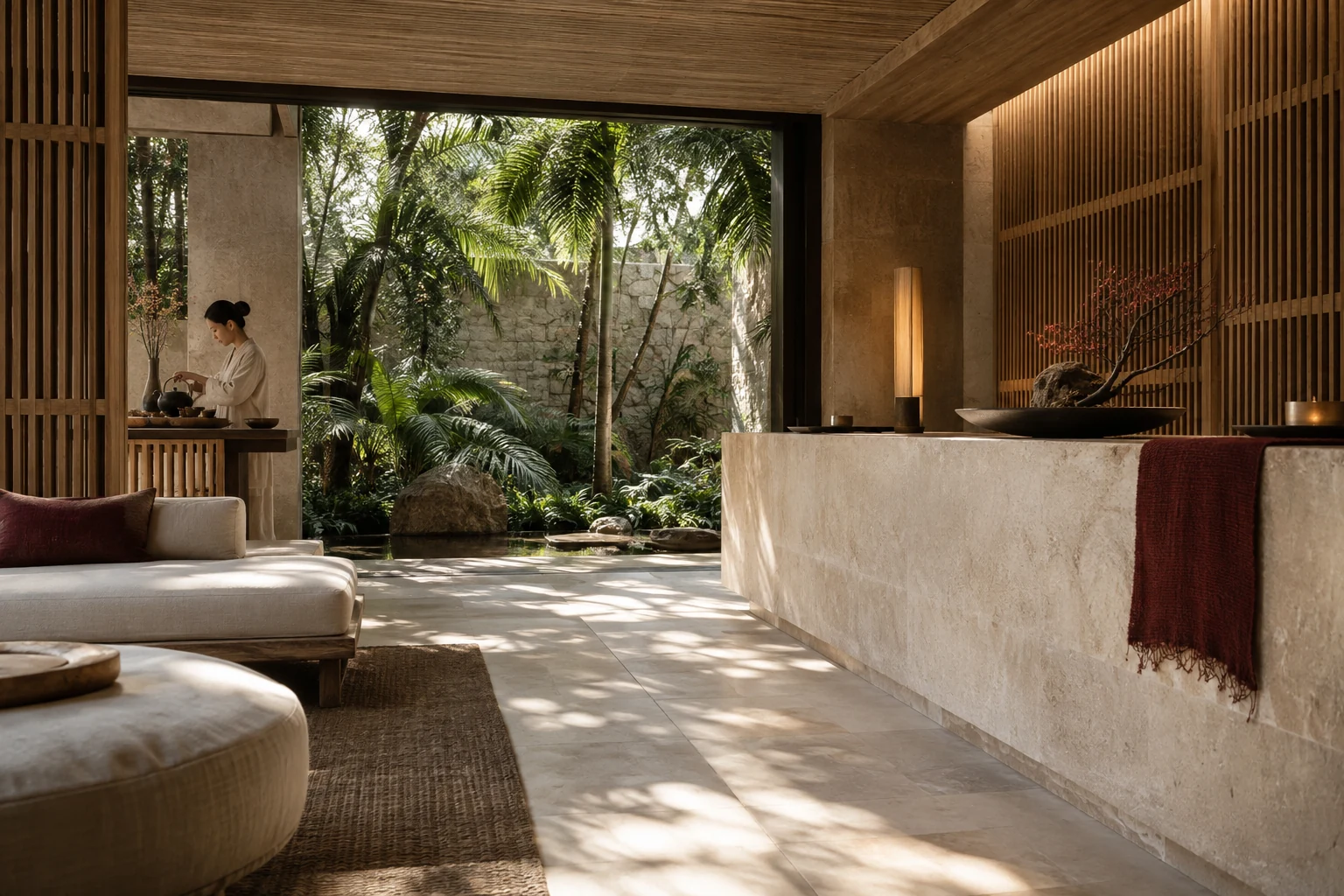
Create a considered transition from a busy day to time set aside for yourself. We explore scent around the welcome, the waiting ritual and the character of your spa, with care for treatments and personal preferences.
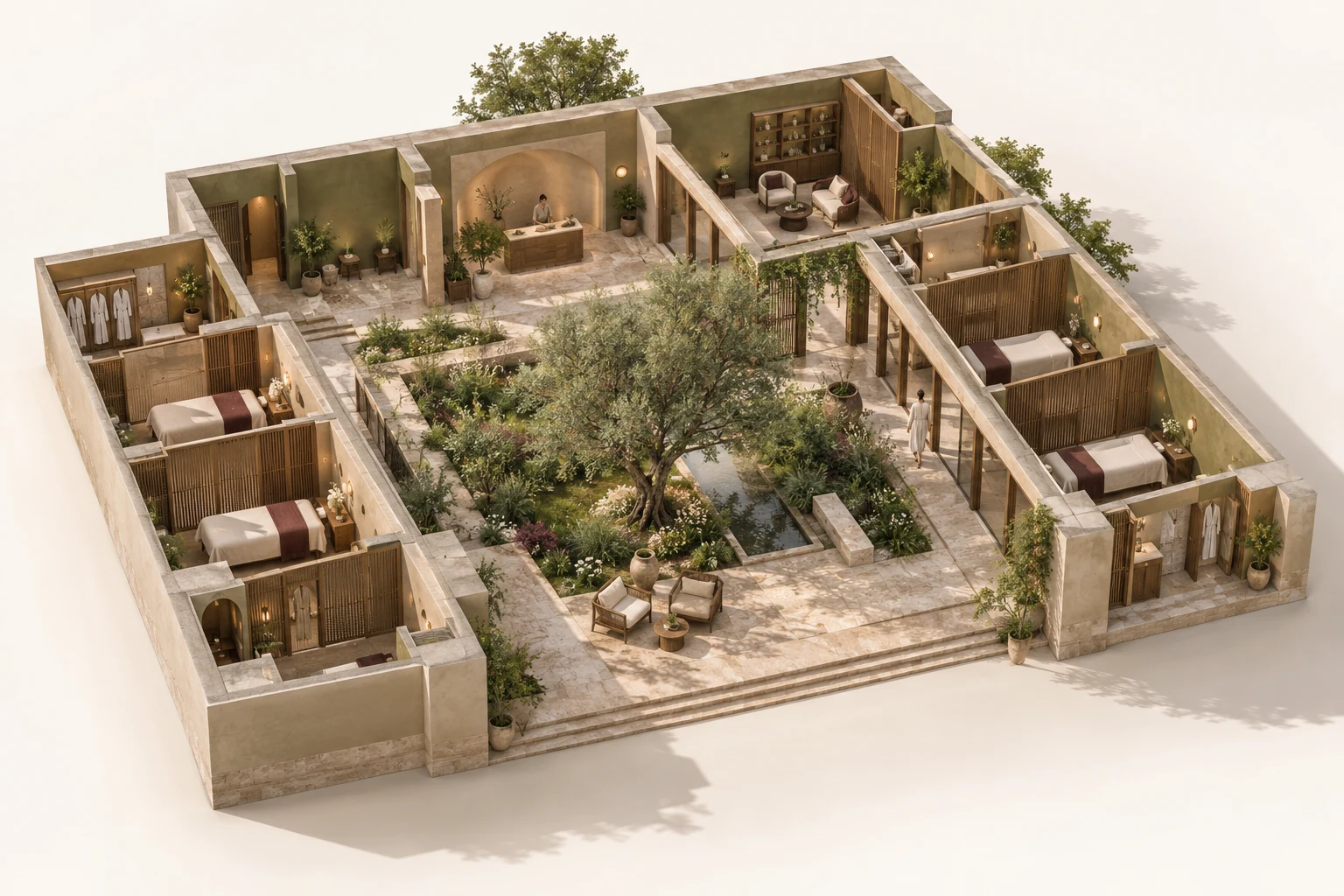
A garden spa arranged around an open courtyard, with reception, a quiet lounge, changing areas and individual treatment rooms. Ambient fragrance and treatment products are considered together.
Worked design brief · an example property, ready to explore.
A quiet sequence, room by room
Drawn footprint
612 m²
Overall extents
30 × 26 m
The study
Ground-floor arrangement
Follow the transition from a shared arrival to a private treatment.Atmosphere concept · a separate architectural illustration, not a measured view of the plan below.
A quiet sequence, room by room
Follow the transition from a shared arrival to a private treatment. Select a decision on the drawing to see what we would inspect, what it changes and what still needs checking.
Swipe across the drawing on smaller screens. Enlarge for detail, or select a decision below.
An example architectural layout, not a surveyed property or construction drawing. A–C mark decisions to review, not confirmed machine quantities. The coloured areas describe intent, not simulated airflow or guaranteed coverage.
Your floor plan is the starting point. The site visit makes the proposal specific.
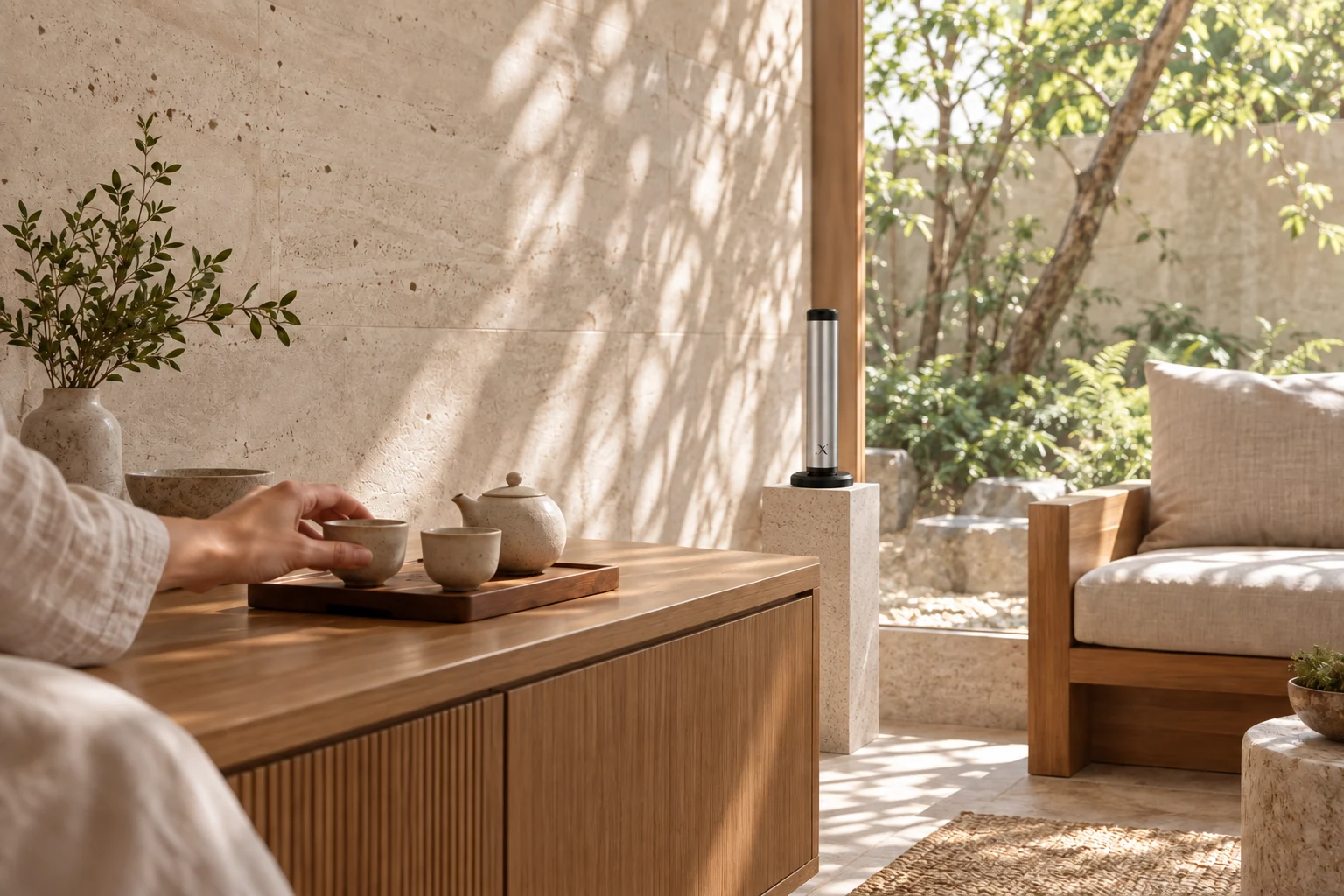
Imagined setting featuring X AP30 . Model and placement depend on assessment.
A quiet detail in the ritual.
A waiting lounge invites a different approach from a treatment room. We consider the products already in use, the person’s proximity to the diffuser and whether a neutral area is preferred.
The spa strategy / A preference, not an assumption
Twenty appointments. Twenty individual welcomes.
Your atmosphere begins in reception, but the treatment experience is personal. A simple preference record makes the handover between booking and therapist more thoughtful.
The guest preference board
Fictional appointments · try editing
Select an appointment, then choose what the team has recorded.
−No added+Open to discuss?Discuss first·Not recorded
Appointment 01
A small question. A more personal welcome.
No guest details are collected or saved. “Open to discussing” is not automatic permission to scent a treatment room.
80%of example appointments have a recorded preference
16 of 20
Recording completion is a service-process measure, not a wellbeing result or a suitability assessment.
4 still to ask
Keep the conversation open. Do not treat an empty record as consent.
A deliberate transition
Shared arrival atmosphere
→
Personal treatment preference
Review treatment products and room connections. Marking a room “no added ambient scent” does not guarantee it is fragrance-free, and switching a diffuser off does not establish a clearance time.
The feeling, before the fragrance.
Explore atmosphere for reception and agreed shared areas, then consider treatment products and individual guest preferences separately. Fragrance is a sensory choice, not a promised treatment outcome.
Soft tea
Delicate · Airy · Quiet
A starting direction for the welcome and waiting lounge.
Botanical greens
Fresh · Leafy · Natural-feeling
An option for garden-facing spaces and bright materials.
Gentle woods
Warm · Grounded · Textural
A direction for intimate timber and stone interiors.
Review where treatment products already add fragrance, how rooms connect and which spaces should receive no added ambient scent.
02
Build in the preference conversation
Agree a simple booking or arrival prompt and how the team records the response. An unrecorded preference is a conversation to have, not consent.
03
Separate arrival from treatment
Develop a shared-area atmosphere only where appropriate. Treatment-room decisions follow the guest conversation and the spa’s own operating practice.
04
Give the team a usable handover
Set out agreed responsibilities and the response to a preference change. Do not assume switching off a diffuser immediately removes fragrance from a room.
What you may be wondering.
Is this aromatherapy or a treatment?
These proposals concern ambient fragrance and the experience of the space. They do not offer a medical or therapeutic outcome and do not replace a practitioner’s treatment decisions.
Can treatment rooms stay unscented?
Yes. Discuss the rooms you want to keep neutral, your treatment products and guest preferences so the proposed zones are clear from the start.
Can we experience a scent before choosing?
We can discuss a fragrance shortlist and the available sampling or trial options. The format, availability and terms are confirmed with the team.
Let’s look at your space.
Bring your floor plan if you have one. Your location, approximate area and the spaces you want to scent are enough to start the conversation.